Good reasons to schedule a sewer line inspection
- You are buying a home, especially an older one
- You are planning a remodel, addition or accessory dwelling unit
- The home has a history of sewer backups or root problems
- Drains on the lowest floor are slow again and again
- Large trees grow near the path of the sewer line
- You are deciding between ongoing cleaning and repairing the line
What a sewer line inspection covers
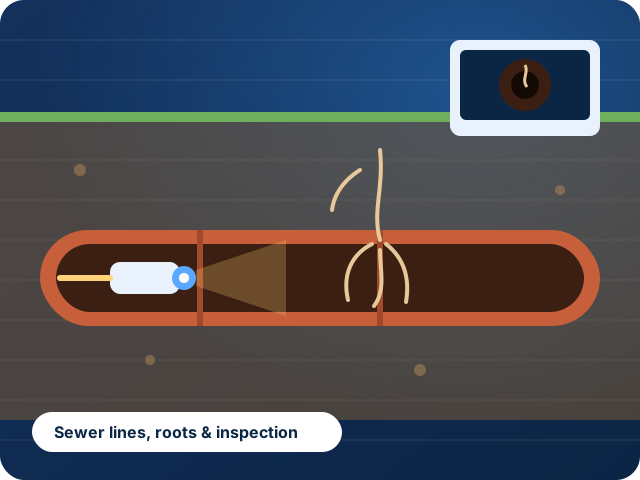
The inspection follows the building sewer from an accessible cleanout, or another suitable access point, toward the connection with the public sewer. As the camera travels, we look at the condition of the pipe and note distances so any problem can be described by location. Typical observations include:
- Pipe material, such as clay, cast iron, Orangeburg, or ABS or PVC plastic, and any transitions between them.
- Joints and connections, including separations and offsets.
- Cracks, fractures and broken sections.
- Root intrusion and how many entry points are visible.
- Sags or bellies where water stands in the line.
- Buildup and debris that suggest the line needs cleaning.
Sewer line inspections for home buyers
A general home inspection usually does not include a camera look at the sewer lateral. If the house is older or surrounded by mature trees, a sewer inspection during your contingency period can show whether the line looks serviceable, needs cleaning, or shows damage worth discussing with your agent before closing.
We describe what we see in plain language and separate routine maintenance items from structural concerns. We do not inflate findings, and a pipe that looks sound will be described that way.
Before a remodel or addition
Adding a bathroom, converting a garage, or building an ADU can increase the load on an existing sewer line or change how new drains tie in. Knowing the condition and route of the lateral before construction helps your contractor plan connections and avoid finding a failing pipe after new floors are installed.
What happens if the inspection finds a problem
If the line is heavily coated or partly blocked, cleaning may be all that is needed; see main sewer line cleaning. If roots are present, our tree root removal page explains how they are cut back and managed. For damaged sections, we show you the footage, note the location and approximate depth where we can, and explain the options so you can decide with a qualified contractor. For a problem in an indoor drain rather than the sewer as a whole, see drain camera inspection.
Sewer Line Inspection in Long Beach, step by step
- 1
Find access
We locate a cleanout or other suitable access point. If none is accessible, we discuss the alternatives with you.
- 2
Scope the lateral
The camera travels the building sewer toward the city connection while we note what we see and how far along it is.
- 3
Locate key findings
Where useful, we use the camera's transmitter to mark the approximate position of problem areas above ground.
- 4
Explain the condition
We go over the footage with you, explain each finding and note which items are maintenance and which are structural.
Buying a home in Wrigley, Zaferia, El Dorado Park or Lakewood Village
Buyers looking in neighborhoods such as Wrigley, Zaferia, El Dorado Park and Lakewood Village often find homes that have been updated inside while the original sewer lateral stays out of sight. New kitchens and baths say little about the pipe under the front yard, and mature trees along many of these streets add to the risk of roots.
Scheduling the scope early in your contingency period leaves time to get a cleaning or repair estimate and discuss it with your agent. Who maintains which part of the line is covered on our main sewer line page.