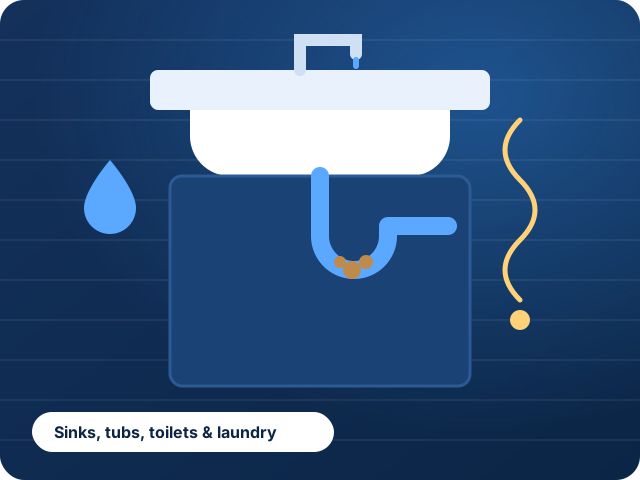
Signs of a kitchen drain clog
- Water stays in one or both sides of a double sink
- Water backs up into the other basin when the disposal runs
- The dishwasher leaves water in the bottom or backs up into the sink
- A sour or rotten smell that comes back after cleaning
- Gurgling sounds when water drains
- Clogs return within weeks after plunging or snaking
Why kitchen sinks clog
In home kitchens, small amounts of fat from pans and plates are the starting point. They cool and coat the pipe, and food particles stick to that coating until the opening shrinks. Other common causes include:
- Coffee grounds, eggshells and rice or pasta that swell with water
- Fibrous scraps like celery, onion skins and potato peels sent through the disposal
- Soap residue combining with grease to form a hard, waxy layer
- A drain line with too little slope, which lets debris settle instead of washing through
Restaurants and other food businesses deal with far heavier loads. That work is covered on our grease line cleaning page.
How we clean a kitchen sink drain
Plunging a double sink rarely works because the pressure escapes through the other basin or the dishwasher connection. We take a more direct approach.
Trap and branch line
We check the P-trap and the connection to the wall first, since a clog there is a quick fix. If the blockage is further in, we run a drain cable through the branch line to break up and pull out the buildup.
Heavier buildup
Where the pipe walls are coated with thick layers, a cable may only open a narrow path. In those cases jetting the line can scour it more completely, depending on the pipe's condition.
Checking the appliances
After the line is clear, we run the sink, disposal and dishwasher to confirm they all drain properly and that nothing leaks at the trap.
What not to pour into a blocked sink
When a sink is fully stopped, nothing you pour in can travel anywhere. Boiling water sits in the basin and can soften PVC trap joints or crack a porcelain sink. Chemical openers sit there too, and leave caustic water for whoever has to open the trap. Bail out what you can into a bucket and stop using the sink until the line is cleared.
Keeping your kitchen drain clear
A few habits make a big difference:
- Pour cooled grease into a can or jar and put it in the trash instead of the sink.
- Wipe greasy pans with a paper towel before washing them.
- Scrape plates into the trash, or into a food-scrap bin if your collection service accepts one, rather than relying on the disposal.
- Run plenty of cold water when using the disposal, and keep it running for a few seconds afterward.
- Use a sink strainer to catch food scraps.
When the problem is not just the sink
If the kitchen sink backs up when you run the washing machine, or other fixtures start draining slowly too, the clog may be in a shared line or the main drain rather than the kitchen branch. We will tell you if that is what we see, and our clogged drain diagnosis service covers tracking down problems that do not stay in one place.
Kitchen Sink Drain Cleaning in Long Beach, step by step
- 1
Check the sink and trap
We look at the basin, trap and disposal connection to rule out a simple local blockage.
- 2
Clear the branch line
A cable goes through the line toward the main drain to break up grease and food buildup.
- 3
Test every connection
We run the sink, disposal and dishwasher to confirm water drains properly.
- 4
Share what we saw
You hear what caused the clog and get practical tips to keep it from coming back.
Kitchen drains in Downtown and Alamitos Beach apartments
In the apartment and condo buildings that fill Downtown and Alamitos Beach, kitchen lines from several units often tie into a shared vertical stack. A clog in that shared line can show up in your sink even if you have been careful, and the lowest units usually notice first.
We can clear the branch from your unit and tell you if the problem appears to be in the shared stack, which the building owner or HOA may need to address. Property managers can also schedule cleaning of shared kitchen stacks before the holidays, when cooking peaks.